

Cultural Game Jam
Turn culture into play in this customisable workshop by acclaimed author Chris Solarski—designing transformative games and interactive experiences that preserve traditions, identities and ways of sensing through hands-on creation. Available in tailored formats from 90-minute teaser workshops to intensive six-day programs, and more.


Kinaesthetic Time Capsules™
[ˌkɪnɪsˈθɛθɪk taɪm ˈkæpsjuːl] Plural Noun
Analogue or digital artefacts used to archive sensory experiences relating to the body and body motion, to be physically re-experienced in the future.
What is it?
Kinaesthetic Time Capsules™ is an original design method that explores cultural heritage, identity and self-expression through play. Grounded in traditional art and design practices, participants develop the mechanics and structures of interaction using artistic processes that emphasise empathy, embodiment and lived experience.
What'll we do?
In the cultural game jams, we explore shared heritage and artistic expression before developing playable prototypes that can form the basis for physical experiences or proof-of-concepts for digital platforms, including gaming consoles, mobile, VR/AR, interactive spatial installations and touchscreens.
Who is it for?
Kinaesthetic Time Capsules™ cultural game jams are designed for cross-disciplinary audiences, particularly in fields where embodied interaction, emotional engagement and personal connection are central—such as data-driven digital communication, museum exhibit design, indie and cultural games, and immersive or participatory media.
Your cultural game jam journey
Part 1
Session 1 – Cultural Heritage of Play
Participants are introduced to the design fundamentals of composition and shape language to explore the underlying structures of expression. They will also examine identity, self-expression, objectives of play, and how interactive experiences affect the audience's body and emotions. The lesson includes active exercises designed to encourage a playful attitude, and familiarise participants with sensory design and the cultural heritage of play.
Session 2 – First Game + Digital Empathy
With a strong foundation in the expressive value of games and interactive media, participants will actively dive into the interaction design process to create their first game. They are provided with a practical method for initiating the creative process, along with tools for maintaining an overview of the user's experience (UX). The afternoon session concludes with insights into how the digital world and interaction design affects the audience's body and emotions—deepening participants’ understanding of digital empathy and embodiment for artistic effect.
Part 2
Session 3 – Interaction Design Fundamentals (1/2)
Day 2 builds on the topics from Day 1, providing a more comprehensive overview of interaction design principles. Topics include game components, affordances, rules, game mechanics, objectives and game balancing—all framed within the context of shape language, embodiment and empathy. Participants are invited to assemble, play and modify a series of games using conventional game components. They are encouraged to adapt and experiment with game structures in preparation for personal projects. Experiences explore using the body as a game component as well as dice and playing cards. Assignments are designed to help participants think differently about everyday objects and how they might be incorporated into play.
Session 4 – Interaction Design Fundamentals (2/2)
The afternoon session continues with exercises from the morning, expanding into more complex topics such as level and spatial design, and Chess-like games. The session concludes with discussions on documenting design concepts, testing and iteration, and bodystorming.
Part 3
Session 5 – Disability Aesthetics + Sensory Conception
Now that participants are familiar with physical prototyping and game mechanics, assignments progress to disability aesthetics, exploring concepts that go beyond neurotypical and able-bodied perspectives. Participants are then introduced to their main assignment: creating an original interactive experience using a sensory object with personal value. They can choose to work individually or in teams.
Session 6 – Experiential Design
Participants continue developing their final project. They deepen their understanding of the broader value of shape language, get tips for setting a clear design direction (avoiding “blank page” syndrome), use music to generate sensory ideas, and apply the unreliable gamemaster design strategy to heighten player engagement and curiosity. By the end of the session, they will have created their own physical prototype, gained a deeper understanding of the transformative value of interaction design on audiences and strengthened their ability to express themselves creatively and interactively.
Meet your teacher
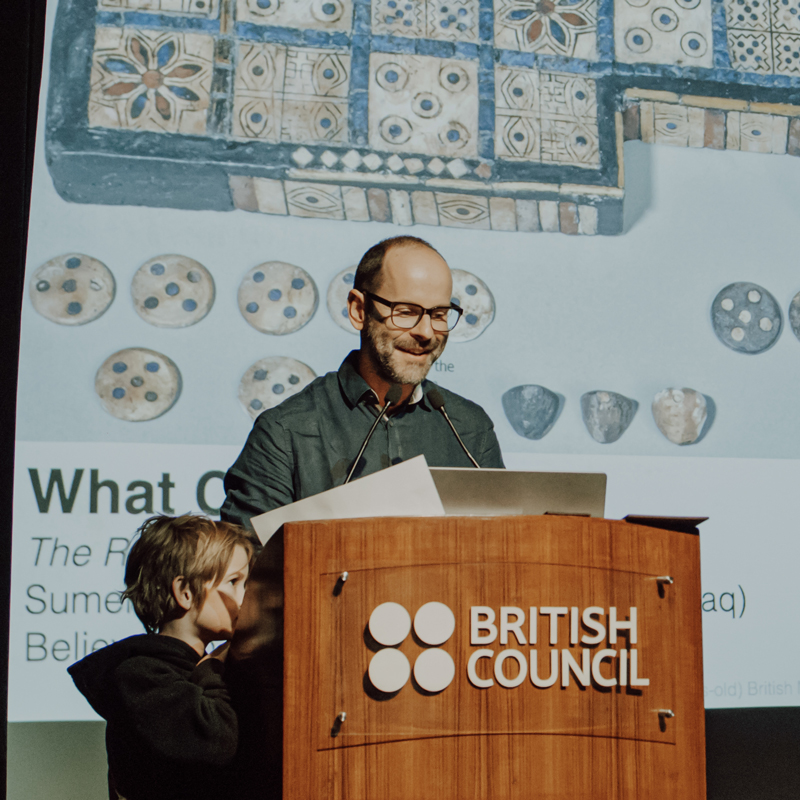
Chris Solarski is the acclaimed author of Drawing Basics and Video Game Art (Watson-Guptill 2012), and Interactive Stories and Video Game Art (CRC Press 2017)—industry-endorsed books on game art, and interactive storytelling that explore the intersections between traditional craft and interaction design. Chris has 15+ years of teaching experience, and his light-hearted and mindful teaching style ensures that all participants comfortably enter the playful spirit necessary for game design—irrespective of experience and background.


Endorsements
"The convergence of narrative in film, video games, and virtual reality will fundamentally change the entertainment industry in coming years. Chris Solarski's book gives content creators crucial insights into interactive story composition and how to adapt these concepts for transmedia storytelling."

"The concepts presented in Chris Solarski's book remind me of Joseph Campbell's powerful demonstration of a universal storytelling structure. This book creates that wonderful feeling of learning new letters, which soon prove useful to form new sentences for bringing new poetry to the world."

"Chris’ work and writings brought me a deep insight and perspective about game design and art. His thorough research on storytelling in games, and how that translates to shape languages in game art that evokes certain emotions to the players, makes me look at visual art very differently today."

"Chris Solarski's book is extremely ambitious; from the smallest detail to broad concepts that encompass an immense scale, its truly applied methodology serves as a catalyst that enriches the reader's heart and promotes the creation of pure art."

"Chris Solarski's book supports my own 30-year crusade to demonstrate that games are an art form that undeniably rivals traditional arts. It gives detailed explanations of game art techniques and their importance, while also highlighting their dependence on artistic aspects of game design
and programming."
_(cropped).jpg)
"Chris Solarski's book is a great game design resource, as it breaks down shape theory in all aspects of design."

"The clever thing about Chris Solarski's book is that it bridges the worlds of game design and storytelling. I would recommend this to anyone who wants to get into game design and understand what's going on beneath the surface."

"Solarski’s Interactive Stories and Video Game Art is an invaluable guide for anyone seeking to better understand the underlying principles and methods behind game art. Chris' clear explanation of the connections between history of art, fine arts, and games will be especially valuable for students and educators in visual culture, art history, architectural history, and fine arts, who will appreciate his elegant approach to explaining underlying principles that shape iconic game art."

Examples of exciting games from past workshops
The gallery below illustrates a sample of the exciting games that have been developed using the Kinaesthetic Time Capsules method, covering topics relating to sensory design, digital empathy, mental health, neurodiversity, disability, HCI, and embodiment, while avoiding typical conflict-based game mechanics.


FAQs
Key topics explored in the workshop include:
- How do game mechanics affect the player’s body and emotions for artistic effect, and how can we use this knowledge for self-expression and digital empathy?
- What expressive qualities do video games have that they inherit and surpass from traditional arts?
- How can individuals, kids and cultural groups engage in game co-creation?
- How can game design convey intangible culture and tradition?
- How can games meaningfully engage with mental health and disability?
- What roles do games play in traditional museum settings?
- In the age of A.I., the metaverse and digital games, how can we playfully connect with the tactile world around us?
- What role does paper prototyping and “body-storming” play in the development process for digital games?
Assignments are accessible and screen-free, with a focus on paper prototyping and body-storming. No previous game design experience is necessary, nor knowledge of coding.
It’s recommended that participants begin assembling a prototyping toolbox filled with standard game components and varied sensory objects with which to playfully experiment. For the purposes of the workshop, the following items represent the minimum material requirements:
- Colouring pencils
- Marker pens
- A4 paper
- Cardboard
- D6 Dice
- Assortment of geometric forms
- Scissors
- Sellotape
- Masking tape
- Mobile phone for documenting exercises
To participate in online workshops, it is important to have the following:
- Stable Internet Connection
A reliable internet connection ensures smooth participation and avoids interruptions during the workshop. - Computer with Audio and Video Capabilities
You’ll need a computer with a working microphone and camera for communication and interaction during the sessions. - Zoom Application Installed and Tested
Make sure you have the Zoom app installed and working properly before the workshop. Test your audio and video settings in advance to ensure you’re ready for the session. - Discord Account (Optional)
While optional, a Discord account can enhance your experience by allowing you to connect with other participants, access resources, and receive updates. Setting this up beforehand is recommended if you wish to engage more with the community.
- Payment & Refunds
Refunds are available if requested at least 15 days before the workshop. No refunds once the workshop has started, except in cases of serious unforeseen circumstances (e.g., medical emergencies). Requests will be considered on a case-by-case basis. - Intellectual Property & Recording
Recording, redistributing, or sharing workshop content (including screenshots) is strictly prohibited. All course materials, exercises, and recordings (if provided) are copyrighted and for personal use only. - Technical Requirements & Responsibilities
Participants are responsible for ensuring they have a stable internet connection and the required software/tools before the session. No refunds will be given for technical issues on the participant’s end. - Conduct & Participation
Respectful behavior is expected. Disruptive participants may be removed from the session without a refund. - Cancellations & Rescheduling
If the workshop is canceled or rescheduled by the instructor, participants will be offered a full refund or a credit for a future session.

My Books


